








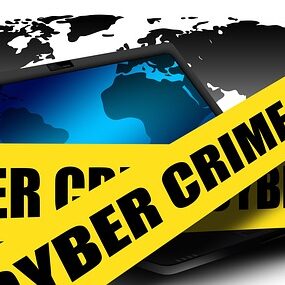
Since the advent of the internet, hackers have never stopped their attacks. Over time, these attacks have not only diversified but also become more sophisticated.
The year 2020 is no exception to the rule. The phenomenon of "cyberattacks" is spreading. It affects all types and sizes of organizations in France and elsewhere.
Why a cyberattack?
According to Thales, 49% of hackers are supported by governments to steal "sensitive data from geopolitical targets." (source: La Tribune).
The objectives are clear: cyber espionage, political destabilization, and sabotage!
What are the targets of a cyberattack?
The States:
"All major global economic, political, and military powers are particularly targeted by attacks." (Thales).
In other words, the world's major powers are the preferred targets of hacker groups: the United States, Russia, the United Kingdom, France, Germany, China, followed by India, South Korea, and Japan.
The defense sector is also targeted by cyber attackers.
Similarly, town halls and local authorities are not immune. And this is only the beginning. This wave of cyber attacks began in the United States a few years ago and continues today. Recently, this scourge has also reached France: the town halls of Sarrebourg and Sequedin, the Eure-et-Loir departmental council, and the Grand Est region.
Finance:
Attracted by the lure of financial gain, 20% of cybercriminals target the finance and commerce sector. According to Thales, "137 different geographical areas have been targeted by groups of attackers operating in this sector."
Energy:
More than 230 malware families target the energy sector, and more than 100 countries have been victims of this type of cyberattack.
Service providers:
Small businesses, SMEs, and mid-sized companies often lack the resources and means necessary to effectively protect themselves from cyberattacks. Cyberattackers know this. Used as intermediaries, these companies are therefore a real gateway for infiltrating larger organizations.
Cyberattacks: what are the main types?
Phishing and spear phishingare the most commonly used techniques. They allow hackers to easily penetrate an organization's information system. The technique is simple and accessible, which explains its "success" among hackers. Ransomware malware is most often behind these cyberattacks. Widely used, ransomware paralyzes an entire computer system by encrypting data and blocking access. The consequences can be disastrous, both financially and organizationally. Imagine a hospital department completely paralyzed by this type of attack! The consequences would be nothing short of catastrophic.
2020 in France
“67% of companies have been victims of a cyberattack, and only 10% are able to deal with it. The number of mid-sized companies affected by cyberattacks has increased from 36% to 63% in 2020. And 93% of IT decision-makers report that their system could tolerate minimal data loss, but 50% of them believe that beyond an hour of downtime, the company's revenues could be severely affected." (source: silicon.fr).
These figures should serve as a warning. Above all, it is urgent to implement a genuine IT security strategy now. Opt for a better anti-phishing solution by raising your employees' awareness of the risks associated with phishing.